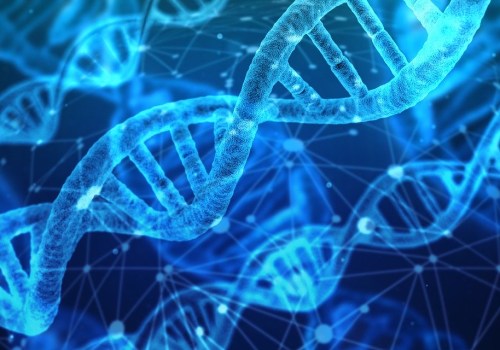
Polynucleotides are fundamental macromolecules that play a crucial role in the biology of all living organisms. At their core, polynucleotides are long chains composed of repeating units known as nucleotides. Each nucleotide consists of three components: a nitrogenous base, a five-carbon sugar, and a phosphate group. This unique structure allows polynucleotides to store and transmit genetic information, making them essential for processes such as heredity, protein synthesis, and cellular function.The term "polynucleotide" itself derives from the prefix "poly," meaning many, and "nucleotide," which refers to the individual building blocks.
When these nucleotides link together through covalent bonds, they form a robust backbone that supports the intricate sequences of bases that encode genetic information. In the case of DNA, two polynucleotide strands intertwine to create a double helix, while RNA typically exists as a single strand. This structural diversity is not merely aesthetic; it underpins the various functions that polynucleotides perform within cells.Understanding polynucleotides is vital for several reasons. Firstly, they are the carriers of genetic information in all living organisms, dictating everything from physical traits to cellular processes.
Secondly, their study has led to significant advancements in biotechnology and medicine, including gene therapy and the development of vaccines. Lastly, polynucleotides are not only limited to DNA and RNA; they also include synthetic variants that have applications in research and therapeutics. As we delve deeper into the world of polynucleotides, we will uncover their complex structures, functions, and the pivotal roles they play in life itself.
What are Polynucleotides?
Polynucleotides are essential macromolecules that play a critical role in the storage and transmission of genetic information. They are polymers made up of repeating units known as nucleotides, which are linked together through covalent bonds.The sequence and arrangement of these nucleotides determine the specific genetic code carried by the polynucleotide.There are two primary types of polynucleotides found in biological systems: deoxyribonucleic acid (DNA) and ribonucleic acid (RNA). Each type has distinct characteristics and functions:
- DNA: DNA is typically double-stranded, forming a structure known as a double helix. This configuration is stabilised by hydrogen bonds between complementary nitrogenous bases: adenine pairs with thymine, while guanine pairs with cytosine. The sugar in DNA is deoxyribose, which lacks one oxygen atom compared to ribose found in RNA.
DNA serves as the blueprint for all living organisms, encoding the instructions necessary for growth, development, and reproduction.
- RNA: RNA is usually single-stranded and plays various roles in the cell, including acting as a messenger between DNA and ribosomes for protein synthesis. The nitrogenous bases in RNA include adenine, uracil (which replaces thymine), guanine, and cytosine. The sugar component of RNA is ribose. There are several types of RNA, including messenger RNA (mRNA), transfer RNA (tRNA), and ribosomal RNA (rRNA), each serving unique functions in the process of gene expression.
They exhibit remarkable stability due to their phosphodiester bonds, which link the sugar and phosphate groups of adjacent nucleotides. This stability is crucial for maintaining the integrity of genetic information over generations. Additionally, the sequence of nucleotides can vary significantly among different organisms, contributing to the vast diversity of life on Earth.In summary, polynucleotides are fundamental biological molecules composed of nucleotides that serve as the building blocks for DNA and RNA. Their unique structures and functions are vital for the processes of heredity and protein synthesis, making them indispensable to all forms of life.
Structure of Polynucleotide Strands
Polynucleotide strands are fundamental components of nucleic acids, primarily DNA and RNA, and their structure is crucial for their biological functions.At the core of a polynucleotide strand is the sugar-phosphate backbone , which provides structural integrity and stability. This backbone is formed by alternating sugar and phosphate groups, creating a long chain that serves as the framework for the molecule.The sugar in DNA is deoxyribose, while in RNA, it is ribose. The difference between these sugars lies in the presence of an oxygen atom; ribose has an additional hydroxyl group (-OH) at the 2' position, which deoxyribose lacks. This subtle difference significantly impacts the stability and function of the nucleic acids.
The phosphate groups are linked to the 5' carbon of one sugar and the 3' carbon of the next, forming what are known as phosphodiester bonds. These covalent bonds are essential for maintaining the integrity of the polynucleotide chain.Attached to each sugar molecule in the backbone are nitrogenous bases , which are critical for encoding genetic information. There are four primary nitrogenous bases found in DNA: adenine (A), thymine (T), cytosine (C), and guanine (G). In RNA, thymine is replaced by uracil (U).
The specific pairing of these bases—adenine with thymine (or uracil in RNA) and cytosine with guanine—forms the basis for the double helix structure of DNA. This pairing occurs through hydrogen bonds, where adenine forms two hydrogen bonds with thymine, while cytosine forms three hydrogen bonds with guanine.The arrangement of these bases along the polynucleotide strand is not random; it follows a specific sequence that encodes genetic information. This sequence determines how proteins are synthesized within cells, making it vital for all biological processes. Understanding the structure of polynucleotide strands, including their sugar-phosphate backbone and nitrogenous bases, is essential for grasping how they function in genetic coding and cellular processes.
Types of Polynucleotides: DNA vs RNA
Polynucleotides are essential macromolecules that play a critical role in the storage and transmission of genetic information.The two primary types of polynucleotides are deoxyribonucleic acid (DNA) and ribonucleic acid (RNA). While both serve vital functions within biological systems, they exhibit distinct structural and functional differences that are crucial for their roles in genetics.
Structural Differences
- Backbone Composition: DNA contains a deoxyribose sugar, whereas RNA contains ribose sugar. The absence of an oxygen atom in the deoxyribose sugar makes DNA more stable than RNA.
- Strand Formation: DNA typically exists as a double-stranded helix, with two polynucleotide strands running antiparallel to each other. In contrast, RNA is usually single-stranded, allowing it to fold into various shapes that are essential for its functions.
- Nitrogenous Bases: Both DNA and RNA are composed of four nitrogenous bases; however, they differ slightly.
DNA includes adenine (A), thymine (T), cytosine (C), and guanine (G), while RNA substitutes uracil (U) for thymine, resulting in adenine pairing with uracil instead of thymine.
Functional Differences
- Genetic Information Storage: DNA serves as the primary repository of genetic information in living organisms. It encodes the instructions necessary for the development, functioning, growth, and reproduction of all known life forms.
- Protein Synthesis: RNA plays a crucial role in translating the genetic code from DNA into proteins. Messenger RNA (mRNA) carries the genetic information from DNA to ribosomes, where transfer RNA (tRNA) and ribosomal RNA (rRNA) work together to synthesise proteins based on this information.
- Regulatory Functions: Various types of RNA, such as microRNA (miRNA) and small interfering RNA (siRNA), are involved in gene regulation and expression. These molecules can modulate the activity of genes, influencing cellular processes such as growth and differentiation.
Understanding these distinctions is fundamental to grasping how genetic information is stored, expressed, and regulated within living organisms.
The Role of Polynucleotides in Genetic Information
Polynucleotides play a crucial role in the storage and transmission of genetic information, serving as the foundational molecules that encode the instructions necessary for life. The most well-known polynucleotide is deoxyribonucleic acid (DNA), which houses the genetic blueprint of an organism. Each DNA molecule consists of two intertwined strands, forming a structure known as a double helix. This unique configuration not only protects the genetic information but also facilitates its replication and expression.At the core of how DNA stores information is the sequence of its nitrogenous bases: adenine (A), thymine (T), cytosine (C), and guanine (G).These bases are arranged in specific sequences along the polynucleotide chains, and it is this sequence that encodes genetic information. For instance, a particular sequence of bases may correspond to a gene, which is a segment of DNA that provides instructions for synthesising proteins.During the process of transcription , the information stored in DNA is converted into messenger RNA (mRNA). This process begins when an enzyme called RNA polymerase binds to a specific region of the DNA, unwinding the double helix and synthesising a single strand of mRNA based on the complementary base pairing rules. In this case, adenine pairs with uracil (U) instead of thymine, while cytosine still pairs with guanine.
The resulting mRNA strand carries the genetic code from the nucleus to the ribosomes, where protein synthesis occurs.Once at the ribosome, another type of polynucleotide, transfer RNA (tRNA), plays a vital role in translating the mRNA sequence into a specific protein. Each tRNA molecule carries an amino acid and has an anticodon that pairs with the corresponding codon on the mRNA strand. This interaction ensures that amino acids are added in the correct order, ultimately forming a polypeptide chain that folds into a functional protein.In summary, polynucleotides are essential for storing and conveying genetic information. Through processes such as transcription and translation, DNA and RNA work together to ensure that genetic instructions are accurately expressed as proteins, which are fundamental to all biological functions.
Polynucleotide Synthesis: From Nucleotides to Strands
Synthesis of polynucleotides is a fundamental biological process that involves the assembly of nucleotides into long chains, forming the basis of DNA and RNA.This process is crucial for various cellular functions, including replication, transcription, and translation. Understanding how polynucleotides are synthesized provides insight into both natural biological mechanisms and laboratory techniques.The synthesis begins with individual units known as nucleotides, which consist of three components: a nitrogenous base, a five-carbon sugar (ribose in RNA and deoxyribose in DNA), and a phosphate group. The bonding between these nucleotides is primarily facilitated through a process called phosphodiester bonding. In this mechanism, the phosphate group of one nucleotide forms a covalent bond with the hydroxyl group on the sugar of another nucleotide, resulting in a sugar-phosphate backbone that is characteristic of polynucleotide strands.During the synthesis of polynucleotides, nucleotides are added sequentially to the growing chain.
This addition occurs in a specific direction, typically from the 5' end to the 3' end of the strand. The enzyme responsible for catalysing this reaction is known as DNA polymerase in DNA synthesis or RNA polymerase in RNA synthesis. These enzymes not only facilitate the formation of phosphodiester bonds but also ensure that the correct nucleotide is incorporated based on complementary base pairing rules.One of the most significant techniques used to synthesise polynucleotides in a laboratory setting is the Polymerase Chain Reaction (PCR). PCR allows for the amplification of specific DNA sequences, making it an invaluable tool in molecular biology.
The process involves repeated cycles of denaturation, annealing, and extension:
- Denaturation: The double-stranded DNA is heated to separate it into two single strands.
- Annealing: Short sequences of nucleotides known as primers bind to specific regions on the single-stranded DNA.
- Extension: DNA polymerase synthesises new strands by adding nucleotides complementary to the template strand.
Polynucleotide Functionality in Cells
Polynucleotides play a pivotal role in the functionality of cells, serving as the fundamental building blocks of genetic material. Their primary functions can be broadly categorised into several key areas, each critical for maintaining cellular integrity and facilitating biological processes.1.Genetic Information Storage and Transmission
At the core of their functionality, polynucleotides, particularly DNA, are responsible for storing genetic information.
This information is encoded in the sequence of nucleotides, which dictates the synthesis of proteins through the processes of transcription and translation. The double helical structure of DNA allows for efficient packing within the nucleus while ensuring that genetic information can be accurately replicated during cell division.
2.Protein Synthesis
Polynucleotides are integral to protein synthesis. Messenger RNA (mRNA), a type of polynucleotide, is transcribed from DNA and carries the genetic code to ribosomes, where proteins are synthesised. Transfer RNA (tRNA) and ribosomal RNA (rRNA) also play crucial roles in this process, facilitating the translation of mRNA into functional proteins.
This intricate interplay underscores the importance of polynucleotides in cellular function.
3.Regulation of Cellular Activities
Beyond their roles in genetic coding and protein synthesis, polynucleotides are involved in regulating various cellular activities. For instance, small interfering RNAs (siRNAs) and microRNAs (miRNAs) are types of polynucleotides that modulate gene expression by targeting mRNA for degradation or inhibiting its translation. This regulatory function is essential for maintaining cellular homeostasis and responding to environmental changes.
4.Applications in Biotechnology
The significance of polynucleotides extends into biotechnology, where they are harnessed for various applications. Techniques such as polymerase chain reaction (PCR) rely on polynucleotide amplification to create millions of copies of specific DNA sequences, enabling genetic analysis and diagnostics.
Additionally, recombinant DNA technology utilises polynucleotides to insert genes into organisms, paving the way for advancements in medicine, agriculture, and environmental science.In summary, polynucleotides are not merely structural components; they are dynamic molecules that underpin essential cellular processes and have far-reaching implications in biotechnology. Understanding their functionality is crucial for both basic biological research and applied sciences.
Polynucleotide Treatments in Medicine and Aesthetics
Polynucleotides have emerged as a significant focus in both medical and aesthetic fields, showcasing their versatility and effectiveness in various treatments. These biomolecules, primarily known for their role in genetic information storage and transfer, are now being harnessed for therapeutic applications that extend beyond traditional uses.In medicine, polynucleotide treatments are being explored for their regenerative properties. They play a crucial role in promoting healing and tissue repair.For instance, polynucleotides can enhance the body’s natural healing processes by stimulating cell proliferation and migration, which are essential for wound healing. This has led to their incorporation into various medical therapies, particularly in orthopaedics and sports medicine, where they are used to treat injuries and accelerate recovery.Moreover, polynucleotides have shown promise in the treatment of chronic conditions such as osteoarthritis. By injecting polynucleotide solutions into affected joints, patients may experience reduced inflammation and improved joint function. This innovative approach not only alleviates pain but also addresses the underlying causes of joint degeneration.In the realm of aesthetics, polynucleotide treatments are gaining traction for their skin rejuvenation capabilities.
These treatments often involve the application of polynucleotide-rich solutions to the skin, which can help improve texture, elasticity, and overall appearance. The mechanism behind this is rooted in the ability of polynucleotides to stimulate collagen production and enhance hydration within the skin.One popular aesthetic application is the use of polynucleotide injections for facial rejuvenation. These injections can help reduce fine lines and wrinkles while promoting a more youthful complexion. Additionally, they are being used in hair restoration therapies, where they aim to stimulate hair follicle activity and promote hair growth.As research continues to unveil the potential of polynucleotides, their applications in both medicine and aesthetics are likely to expand further.
The dual benefits of promoting healing while enhancing beauty make them a compelling option for patients seeking effective treatments that align with their health and aesthetic goals.
Future Perspectives on Polynucleotide Research
The field of polynucleotide research is rapidly evolving, with significant implications for various scientific disciplines, particularly in genetic engineering and biotechnology. As we look to the future, several key areas of research are poised to expand our understanding and application of polynucleotides.Advancements in Genetic Engineering
One of the most promising avenues for future research involves the refinement of genetic engineering techniques. The advent of CRISPR-Cas9 technology has revolutionised the way scientists manipulate polynucleotides, allowing for precise edits to DNA sequences. Future studies may focus on enhancing the efficiency and accuracy of these techniques, potentially leading to breakthroughs in gene therapy for genetic disorders.Moreover, researchers are exploring the use of synthetic polynucleotides to create novel genetic constructs.
These synthetic sequences can be designed to perform specific functions within cells, such as regulating gene expression or producing therapeutic proteins. As our understanding of polynucleotide interactions deepens, we may see an increase in the development of tailored polynucleotide sequences that can be used in targeted therapies.
Potential Applications of Polynucleotides
The potential applications of polynucleotides extend beyond genetic engineering. In medicine, polynucleotides are being investigated for their role in vaccine development. For instance, mRNA vaccines have gained prominence due to their ability to instruct cells to produce antigens that trigger an immune response.
Future research may lead to more effective vaccines against a range of infectious diseases and even cancer.Additionally, polynucleotides hold promise in regenerative medicine. Their ability to influence cellular behaviour makes them valuable in tissue engineering and stem cell research. By harnessing the properties of polynucleotides, scientists aim to develop strategies for repairing damaged tissues or organs.
Conclusion
As we advance into a new era of scientific discovery, the exploration of polynucleotides will undoubtedly yield transformative insights and applications. From enhancing genetic engineering techniques to developing innovative medical therapies, the future of polynucleotide research is bright and full of potential.
Conclusion: The Significance of Polynucleotide Strands
In summary, the role of polynucleotide strands in biological systems is both profound and multifaceted.These structures, primarily represented by DNA and RNA, serve as the fundamental building blocks of life, encoding the genetic information necessary for the development, functioning, and reproduction of all living organisms.Polynucleotides are not merely chains of nucleotides; they are intricate polymers that facilitate a range of essential biological processes. The double helical structure of DNA, composed of two antiparallel polynucleotide strands, exemplifies how these molecules can store vast amounts of genetic information in a compact form. The specific pairing of nitrogenous bases—adenine with thymine and guanine with cytosine—ensures accurate replication and transcription, which are critical for cellular function and inheritance.Moreover, the single-stranded nature of RNA allows it to perform diverse roles beyond mere information storage. RNA is involved in protein synthesis as messenger RNA (mRNA), acts as a structural component in ribosomes (rRNA), and plays a crucial role in the translation process through transfer RNA (tRNA).
This versatility highlights the importance of polynucleotides in gene expression and regulation.In the realm of medicine, polynucleotides have emerged as powerful tools for therapeutic interventions. Their ability to influence cellular processes has led to innovative treatments, including gene therapy and regenerative medicine. For instance, polynucleotide-based therapies are being explored for their potential to enhance wound healing and tissue regeneration, showcasing their significance beyond traditional genetic functions.Furthermore, advancements in biotechnology have enabled the synthesis and manipulation of polynucleotides for various applications, from diagnostics to targeted drug delivery systems. As research continues to unveil the complexities of these molecules, their potential to revolutionise medicine becomes increasingly apparent.In conclusion, understanding polynucleotide strands is crucial not only for grasping the fundamentals of genetics but also for harnessing their capabilities in medical science.
Their significance extends far beyond their structural roles; they are pivotal in shaping life itself and hold promise for future innovations in health and disease management.